

Looking for something? Search Here »

Caring For My Guinea Pig

What is a Guinea Pig?

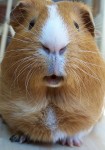
A Guinea Pig is a small furry warm blooded mammal from the Species “Cavia”. It is rodent, like a rabbit, but much smaller and has no visible tail and tiny ears. They are not expensive to buy, but you need proper equipment to care for your pet properly. Guinea Pigs are common pets in Australia, but are often not cared for well and many die early from preventable problems. There is a strong association between owners who learn how to manage their pets and handle them properly and a long and healthy pet.

What kinds are there?

There are many kinds, of which two are generally found in Australia. The “American” has short smooth hair lying flat along the body, and the “Abyssinian” has longer coarse hair which lies in rosettes, swirls or whorls. Colours can be white, red, tan, brown, chocolate, and black, and some animals are multi-coloured.

Other kinds, including the Peruvian, Texel, Coronet and Silkie have long silky hair that needing lots of grooming, but these are not commonly seen as pets in Australia. facecommons
Pets Australia members can LOG IN to access this guide – including the kinds of Guinea Pig, Guinea Pig language, Guinea Pig feeding, The healthy Guinea Pig, Guinea Pig play, Guinea Pigs and Australian summers, Guinea Pig living, Guinea Pig foods, and Guinea Pig facts that could win you prizes at trivia night.

[private_passionate pet owner]

How do I know if my Guinea Pig is healthy?

A healthy adult guinea pig weighs about 900-1200g (males) and 700-900g (females). They should have a shiny coat, and can live as long as 12 years with the average lifespan being 5-6 years.

Try not to choose Guinea Pigs that are panicky when handled and do not relax quickly, or those who are over quiet as these might be ill. Your choice should be alert and active, not skinny or overweight, with a firm rounded body. Eyes, nose and ears and rear end should be clean and free from discharge, and the skin should be firm and clear with no parasites.

Thanks, Sophie & Eliza!

How do they normally behave?

Guinea Pigs are lively and responsive little pets if they handled from the time they are young. They can stress easily when things in their environment change suddenly.

You can tell from their behaviour how they are feeling, for example, if they feel:

  • In Danger:  They will either freeze in response to noise, or run off suddenly
  • Content or just “talking”: squeaks, chortles and little grunts
  • Wanting attention or looking forward to dinner!: “Wheeking”, a long loud squeal or whistle
  • Content: low purr
  • Annoyed: high pitched purr
  • Romancing (male to female):rumbling noise
  • Angry: Teeth chattering, showing teeth, or hissing, means “go away!

Guinea pigs also have a recognisable body language, including:

“Popcorning”: jumping about like popcorn when they are playful and happy

Freezing: when startled or uncertain about what’s going on

Sniffing: to explore their environment or just say “hello”

Touching Noses: “Hello!”

Being aggressive: by standing stiffly on the hind legs, fluffing hair and showing teeth –if this continues, expect a fight.

Strutting: around the ladies before mating

Fidgeting while being held: your little pet wants a break and may need to go to the toilet.

Tossing head in air: “ I’m getting a bit grumpy, please stop patting now!”

Why do they run away?

Guinea Pigs are naturally shy and will take a long time before they willingly overcome this instinct and come to you for cuddles. Be quiet and patient.  If grabbed, young Guinea pigs may nip and squeal loudly!

So how do I hold them?

Expect normal healthy Guinea Pigs to squeal and wriggle when you pick them up, hold them close to your body and cover their eyes to help calm them if they don’t settle down. Hold them firmly but gently under the chest.

How do they like to live?

Wild Guinea Pigs generally live in small groups of 5-10 in burrows or cracks in rocks. “Same sex” groups may fight to work out who is “boss”, especially all-male groups.  As pets, they can be messy, with lots of urine and faeces produced.

Cages should be as large as possible, and 25cm high to avoid jumping and climbing. Cages need really good ventilation. DO NOT use wire floored cages. They will need a “hide” area to sleep and hide from danger like wooden boxes, PVC plumbing pipe or cardboard boxes. (Pipes are good as they can be cleaned in a dishwasher). Many Guinea Pigs will use a litter tray.

Guinea Pigs will need good bedding and it will need to be changed often – avoid paper and wood shavings as the dust can irritate their little noses.

Guinea Pigs are social animals and really need the company of other Guinea Pigs –  ideally all of the same sex so you don’t have unwanted babies popping out! DO NOT keep Guinea Pigs with Rabbits in the same cage, as they can share deadly germs.

What about playtime?

Guinea Pigs like to play to be happy. You can make tunnels out of plastic or wood, or ramps (attached to the cage so they don’t fall off). Straw mats for chewing, toys, rattles and fleece blankets all make life fun for your little friend. Hide food treats so your little pet has to find them and also allow your pet to play outside the cage, especially if the cage is small.

Guinea Pigs also need things to wear their teeth down because these teeth grow continually. Provide your GP with pumice stones, or wooden sticks from young branches so they don’t splinter (but avoid poisonous trees like cedar and oleander or those that have been sprayed with insecticide).

What about temperature?

Guinea Pigs come from the countries in South America and they are at real risk of heat stroke in summer. Temperatures of more than 26C, particularly with high humidity, can cause serious illness and sometimes death.

What do they like to eat?

Guinea pigs are vegetarians, they do not eat meat or meat products. They are one of only a few animals on earth (including humans) that needs Vitamin C in their diet.

Your Guinea Pig needs a daily diet that includes:food

Vitamin C sources: capsicum, tomatoes, spinach, orange, kiwi or strawberries

Fibre: Grass hay, vegetables and pelleted feeds

Protein: eg lucerne hay in small amounts, grasses, pellets, ,

Treats: Not more than 1 teaspoon pet day of grains or fruits.

Feed a variety of foods when your Guinea Pig is young to avoid fussiness later.

What about water?

Your little pet will need good supplies of fresh, cool water at all times – if you are using an automatic watering bottle make sure the tube is clean and not touching the walls, bedding or floor.

Keeping your pet clean

Keeping the cage clean keeps your Guinea Pig clean. Remove and replace bedding often to avoid faeces and urine getting caught in the fur. Guinea Pigs will tolerate a bath if they were trained to it when they were young, otherwise just them wipe down with a damp cloth and don’t forget to clean your pet’s bottom!

Desexing

Guinea Pigs can be desexed, but for most people it is better and easier just to keep pets of the same sex together.

Veterinary treatment

As a general rule Guinea Pigs do well if the cage is cleaned regularly and routine veterinary treatment is not required. If your pet is ill, see your vet immediately.

Some odd facts…

The Guinea Pig was domesticated in South America more than 1500 years ago.

As well as being pets, Guinea Pigs have been used for food!1200px-guineapig_image1

Like rabbits, Guinea Pigs produce a special “faecal pellet” which looks different to “poo” and is actually full of vitamins, which the Guinea Pig will eat.

[/private_passionate pet owner]


© 2026 Pets Australia Pty Ltd